

To clean a shower curtain, check its care label, remove the hooks, and wash it with mild laundry detergent using a method suited to its material. Machine-wash washable fabric on a gentle cycle, and hand-clean plastic liners unless their label allows machine washing. Rinse well and hang the curtain fully open to dry, then treat any remaining stains only with a cleaner approved for that material.
Check the Material Before You Choose a Cleaning Method
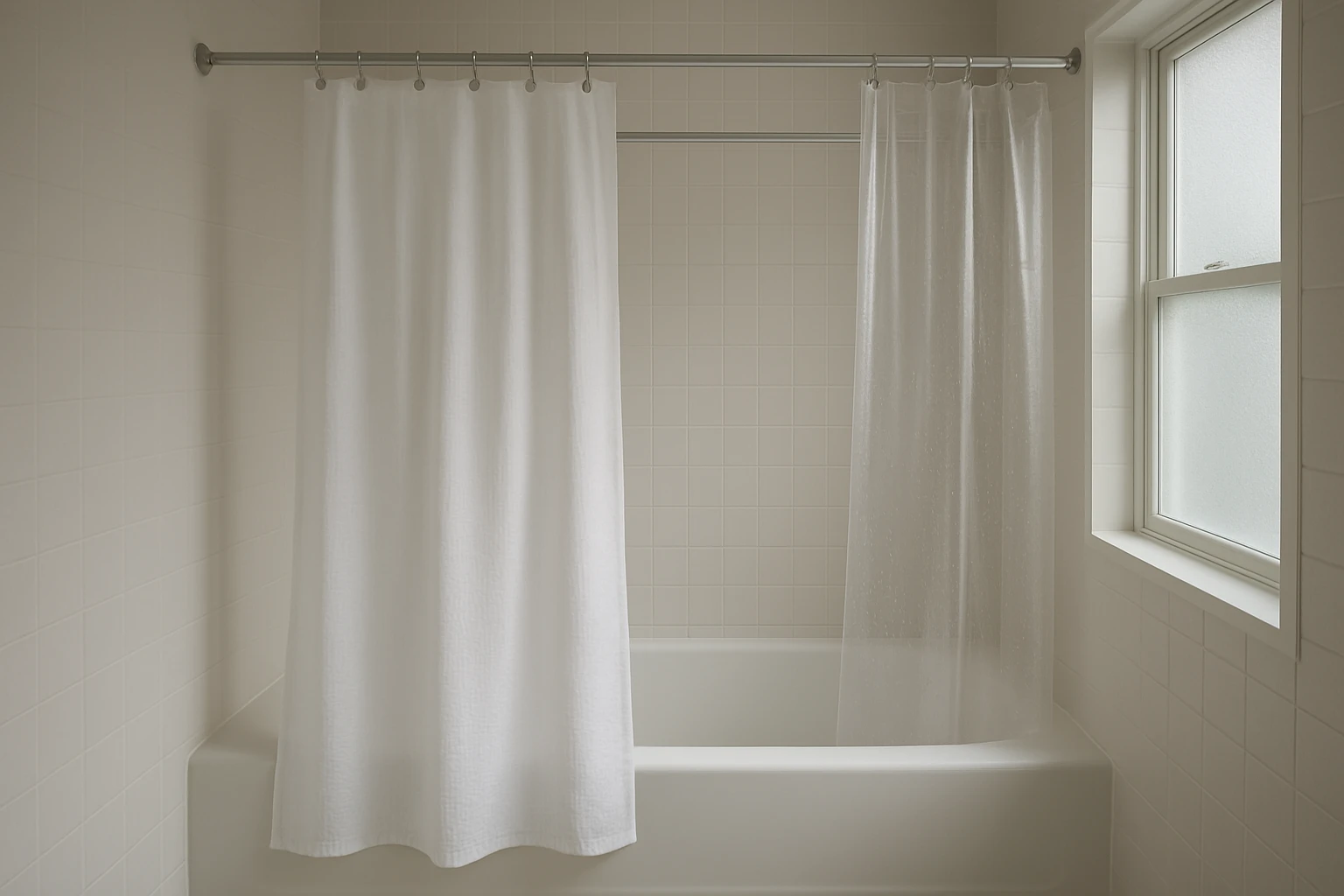
Follow the care label, not the curtain’s appearance, when choosing how to wash it. A fabric shower curtain may have a coating that needs gentle care, while a plastic liner may or may not be safe in a washing machine.
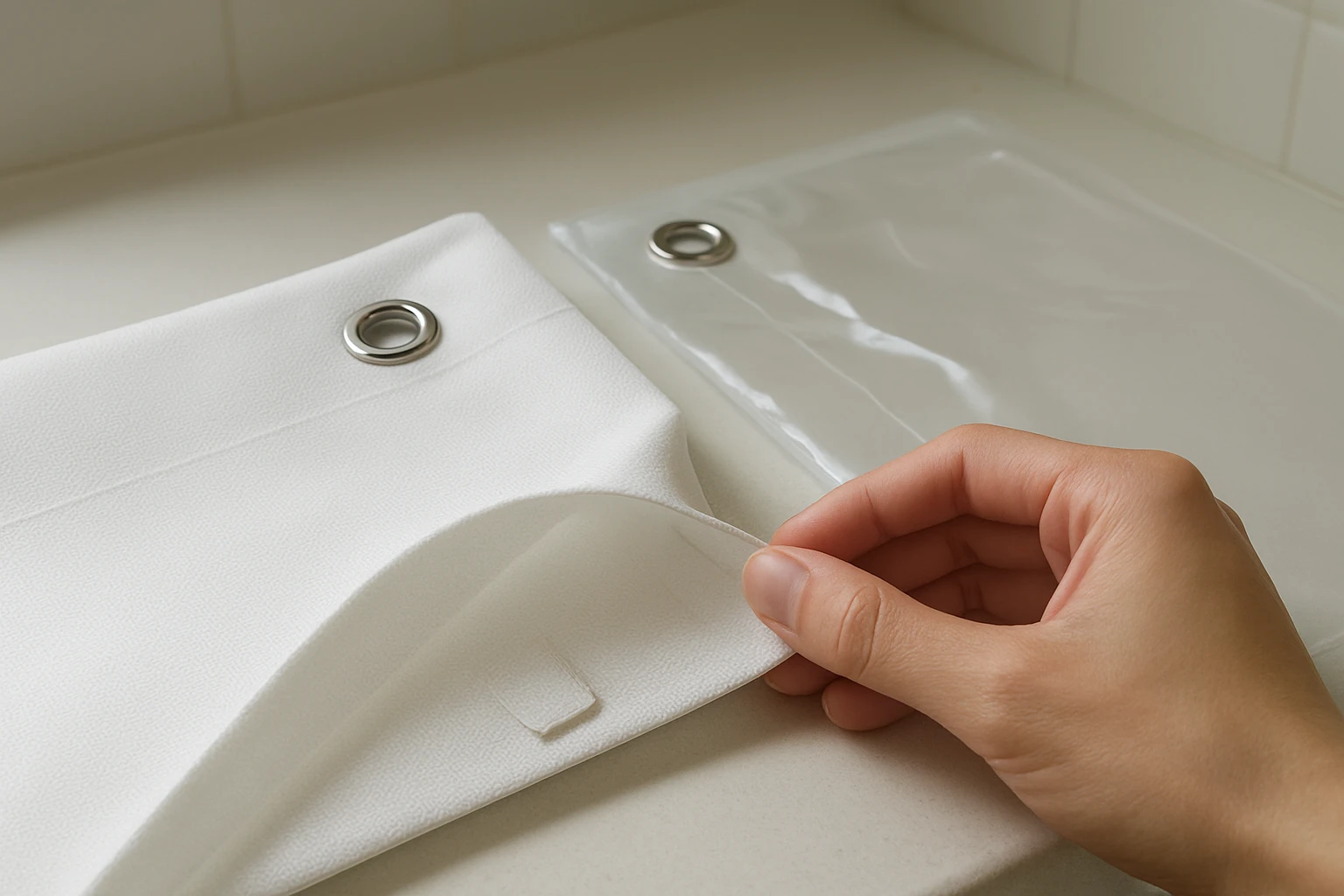
A shower curtain is the outer panel, while a shower liner is the inner layer that keeps water inside the bath or shower. Some products do both jobs, so check each piece rather than assuming the curtain and liner need the same wash.
This guide from The Curtain Shop focuses on cleaning the material safely, rather than using one strong cleaner for every stain.
| Curtain or Liner Material | Suitable Starting Method | Main Risk to Avoid |
|---|---|---|
| Polyester or nylon fabric | Gentle machine wash if the care label allows it | High heat can damage coatings or distort the fabric |
| Cotton or a cotton blend | Follow the stated wash temperature and drying method | Shrinkage, fading, and damage to decorative trim |
| PEVA or EVA plastic liner | Hand-clean, or machine-wash only when approved | Heat, sharp folds, and rough spinning can cause damage |
| PVC or vinyl liner | Wipe or hand-wash unless machine washing is allowed | Hot water and dryer heat can warp the plastic |
| Fabric with delicate trim or a special finish | Use the maker’s stated cleaning method | Soaking or stain treatment may damage the finish |
PEVA, EVA, and PVC are types of plastic used in shower liners. They do not all tolerate the same cleaning method, even when they look alike.
If the label is missing, hand-clean plastic with a soft cloth and mild detergent in lukewarm water. For an unknown fabric or special finish, ask the supplier before soaking it. If the product is still under warranty, check its product warranty before using bleach or another strong treatment.
Before you start, gather mild laundry detergent, a soft cloth or sponge, gloves, and a basin or clean bathtub. Remove the hooks and look along the bottom hem and around the hook holes for weak spots, since washing can turn a small split into a larger tear.
How to Wash a Shower Curtain in the Washing Machine
Machine-wash a shower curtain only when its care label allows it, using the stated temperature and a gentle cycle. The safest setting for washable fabric is usually cool or warm water, but always follow the label over general advice.
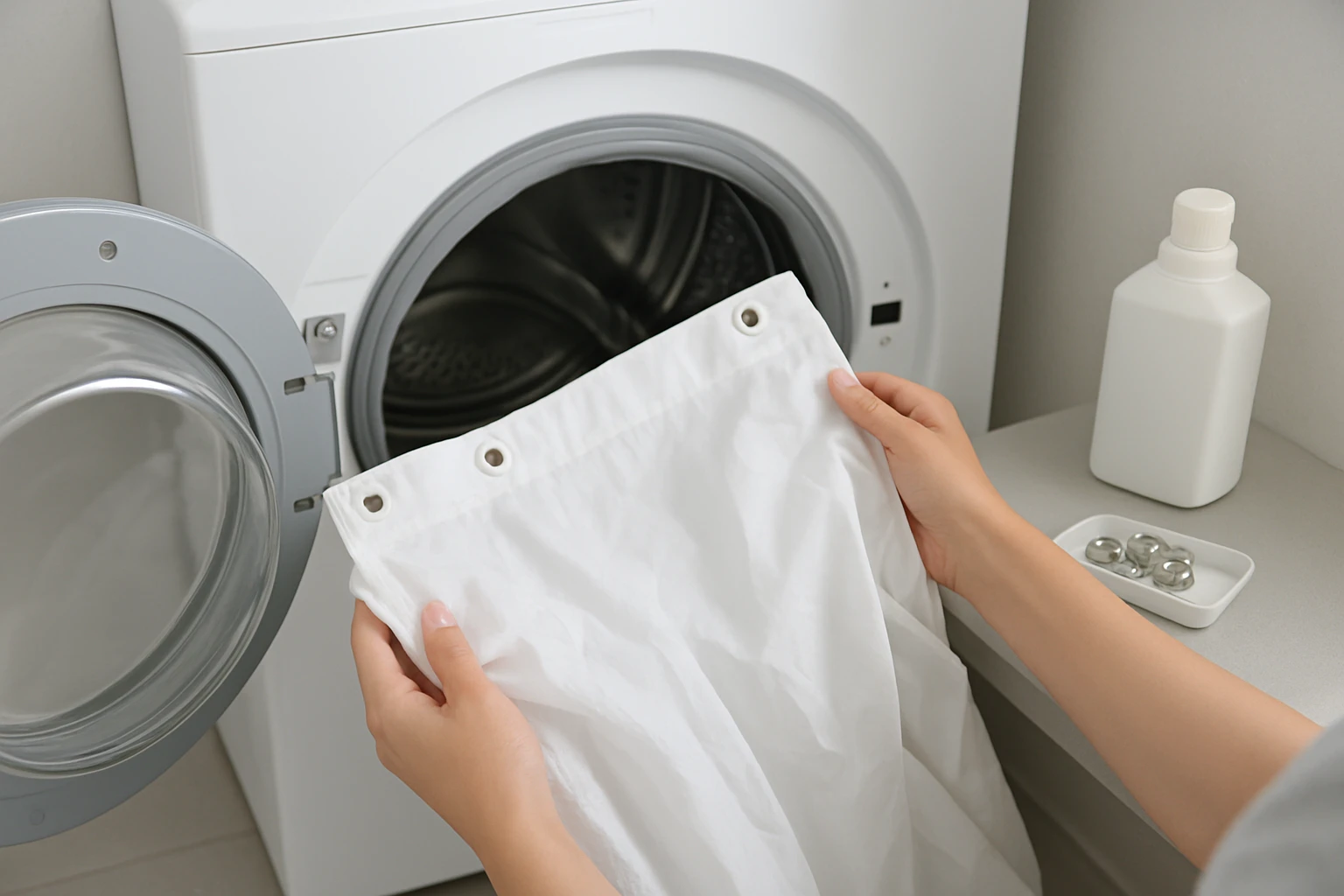
- Remove every hook or ring, and separate the curtain from its liner. Do not wash them together unless their care instructions match.
- Treat dirty areas with a little mild liquid laundry detergent. Gently work it into washable fabric with your fingers, following the detergent’s directions for treating stains before washing.
- Place the curtain loosely in the drum. Do not wind it around a central agitator, which can catch the hem or pull at the hook holes.
- Add detergent using the product’s dose for the load size and how dirty the curtain is. Extra detergent can leave a film that makes the curtain feel stiff or sticky.
- Choose the permitted gentle cycle and temperature. For an approved machine-washable plastic liner, use the lowest suitable spin setting and avoid heat.
- Remove the curtain as soon as the cycle ends, then hang it fully spread out to dry. Use a dryer only when the care label clearly permits it.
Some manufacturers suggest adding a couple of light-colored towels to help clean and cushion a liner. Follow that advice only when it suits both the liner and the machine, because a heavy, crowded load puts more strain on thin plastic.
If the curtain still feels soapy, run an extra rinse rather than adding another cleaner. A common mistake is pouring vinegar, bleach, and detergent into the same wash to make it stronger, but mixing cleaning products can create harmful fumes or damage the material.
How to Hand-Clean a Plastic Shower Curtain or Liner
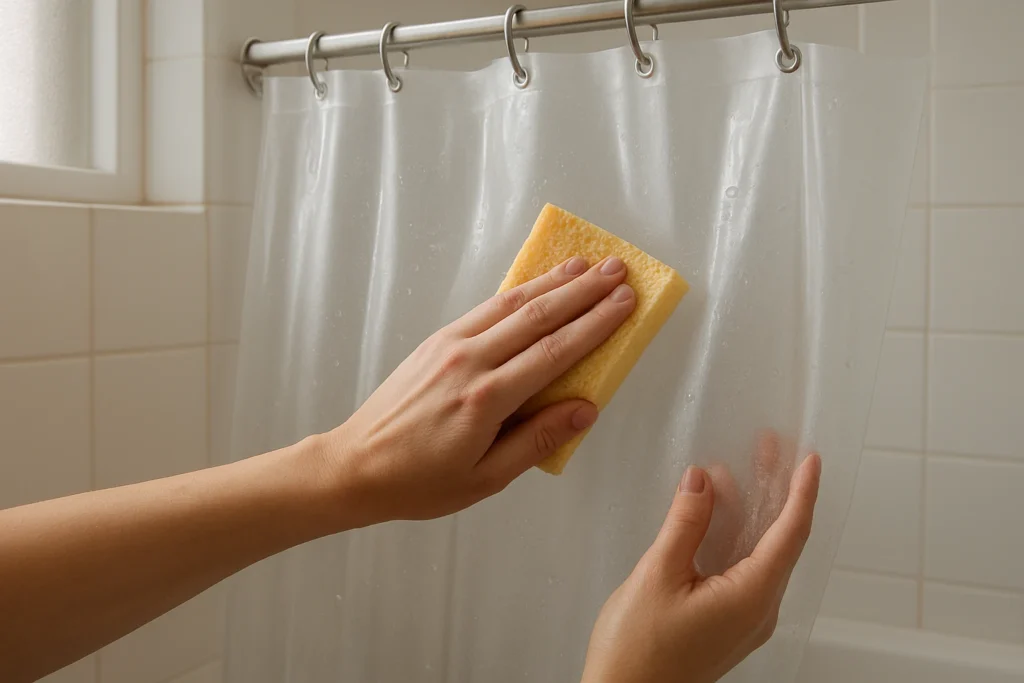
Hand-cleaning gives you more control over a thin plastic liner, especially when the care label is missing. Use lukewarm water, mild detergent, and a soft cloth so you can lift the dirt without scratching or stretching the plastic.
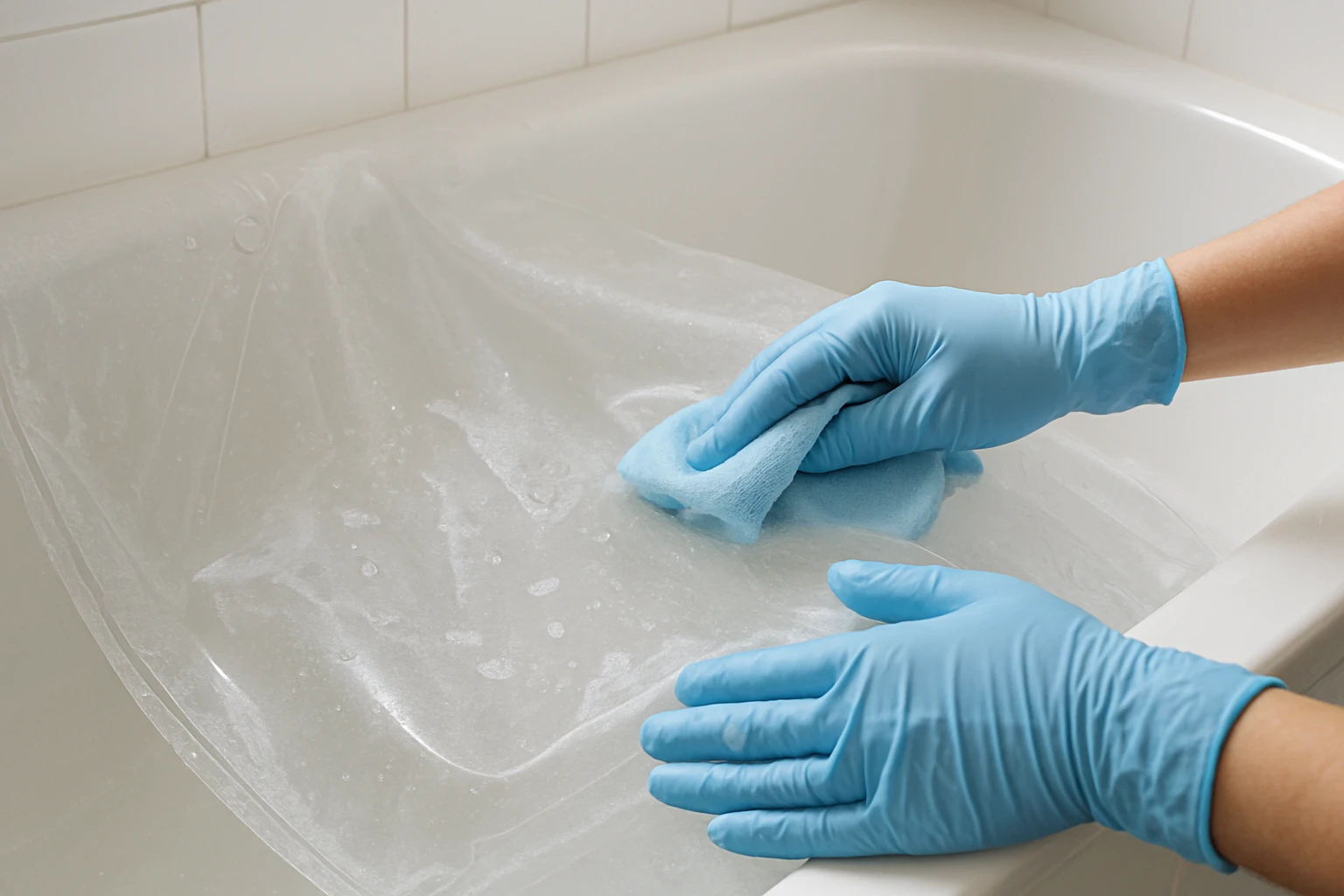
- Take down the liner and lay it in a clean bathtub or a basin large enough to hold it without tight folds.
- Add enough lukewarm water to wet the dirty areas, then mix in a small amount of mild detergent according to its hand-washing directions.
- Let the dirt soften briefly, then wipe both sides with a soft cloth. Give the lower edge, seams, and spaces around the hook holes extra care.
- Drain the dirty water and rinse the liner until no slippery detergent film remains.
- Lift the liner while supporting its weight, then hang it open over the bath or shower tray to drip-dry.
Do not wring plastic or scrub it with a stiff brush, scouring pad, or abrasive powder. Scratches can dull the surface and make later cleaning harder, while wringing can split an older liner along a crease.
For a fabric shower curtain that allows hand-washing, press the soapy water gently through the cloth rather than twisting it. Support the wet curtain as you lift it, since the added water weight can strain delicate seams.
How to Remove Soap Scum, Mildew, and Other Stains
Match the cleaner to the buildup instead of treating every mark as mold. Soap scum, mineral scale, and mold or other growth need different care, and color alone cannot tell you exactly what is on the curtain.

White Film and Soap Scum
Start with mild detergent and gentle wiping for a dull, greasy, or cloudy film. Soap and body-product residue often build up where shower water runs down the liner, so clean both sides of the lower edge rather than only the visible side.
If a chalky deposit remains after washing, it may be mineral scale. Use a limescale cleaner only if its label allows use on that curtain material, and test a hidden area first. Keep acidic cleaners away from nearby natural stone and any surface their label warns against.
Vinegar is not suitable for every shower curtain, and it should not replace a product’s care instructions. Never combine vinegar or any other acid with chlorine bleach.
Black Spots and Pink or Orange Film
Wash away surface dirt first, because a stain treatment cannot work well through a layer of soap residue. Wear gloves and keep the bathroom well ventilated, especially if the curtain has visible mold or a strong musty smell.
For washable fabric, a laundry stain remover or oxygen bleach may help if both the curtain label and cleaner label allow it. Oxygen bleach is not the same as chlorine bleach, so do not assume it disinfects unless the product label says it does.
Use chlorine bleach only when the curtain’s care label permits it, and follow the bleach label’s instructions for dilution, contact time, and rinsing. Never mix it with vinegar, ammonia, toilet cleaner, or any other cleaning product. There is no single safe bleach recipe for every bottle or curtain.
Pink or orange film is not proof of a particular germ, and dark spots are not enough to identify a mold species. Clean the buildup, rinse thoroughly, and dry the curtain well rather than choosing a harsh product based on color alone.
Rust Marks Around the Hooks
Rust-colored marks may come from damaged metal hooks rather than dirt in the curtain itself. Remove the source first, then use a fabric-safe rust remover only if the curtain and cleaner labels allow it.
Do not use chlorine bleach on rust stains, because it can make them harder to remove. If the hook coating is flaking or the metal keeps leaving marks, replace the hooks before rehanging the clean curtain.
How to Dry a Shower Curtain and Keep It Clean Longer
Hang a clean shower curtain fully open so air can reach both sides, and keep its lower edge from sitting in pooled water. Washing removes buildup, while thorough drying helps keep damp folds from getting dirty again so quickly.
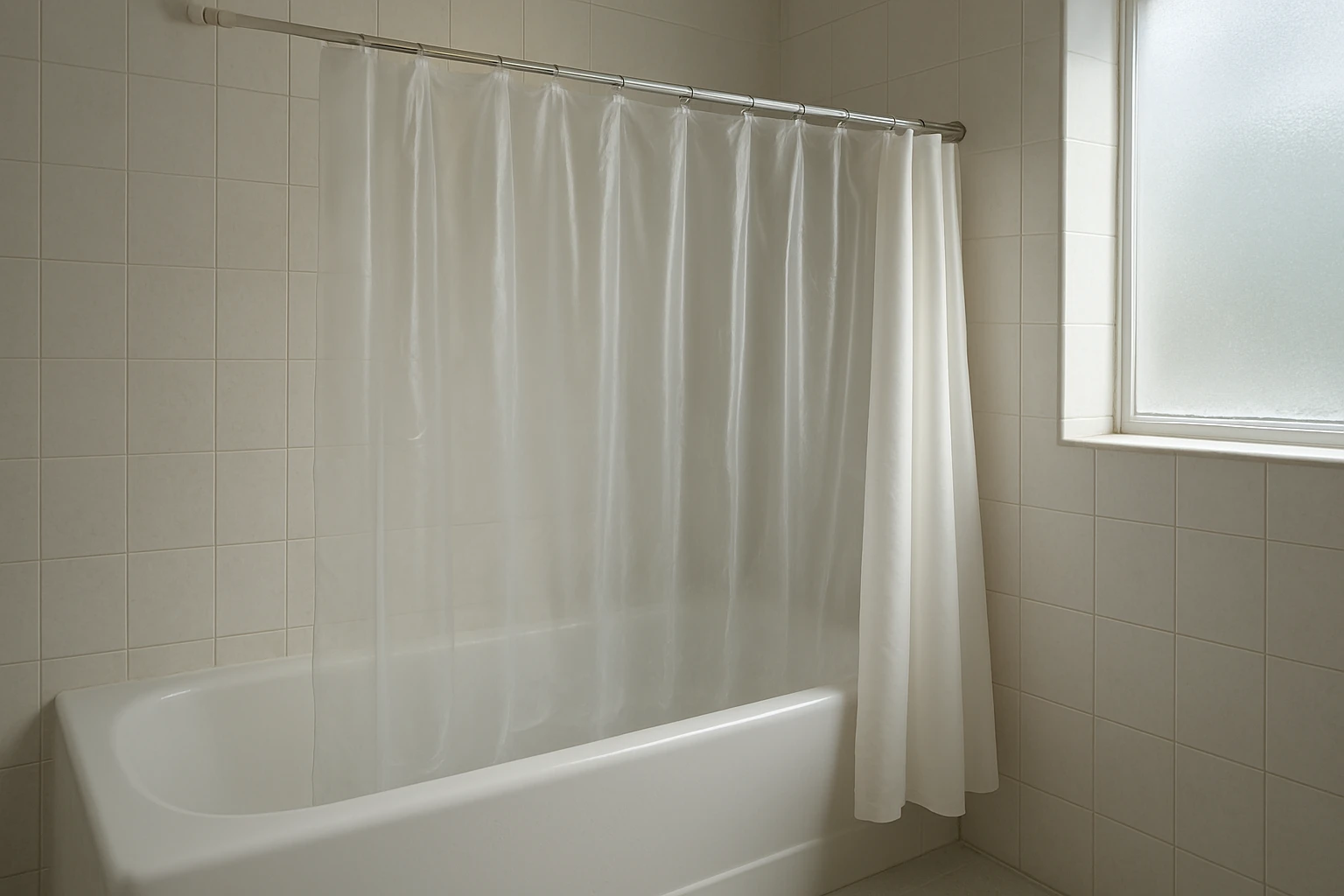
After each shower, spread the curtain along the rod instead of leaving it bunched at one end. Keep the liner inside the bath and the decorative outer curtain outside, unless the product is designed differently, so the fabric does not soak up water from the rim.
Run the bathroom extractor fan during the shower and afterward until the room clears of steam. An open window can help when outdoor air is drier, but humid outdoor weather may do little to dry an already damp bathroom.
Check the lower edge each week and wash the curtain when you notice film, spots, or a musty smell. About once a month, check whether the whole curtain needs a wash, then adjust that schedule based on how often you use the shower and how well the room dries. Use this as a starting point, not a fixed rule for every home.
A few small changes can help keep the curtain clean longer:
- Rinse obvious shampoo and soap splashes from the liner after showering.
- Clear water trapped on the bath rim, where it can keep the hem wet.
- Let the curtain dry before folding or storing it.
- Check that the liner hangs inside the bath without dragging along its base.
If the same bottom strip gets dirty again while the rest stays clean, check its length and position before trying a stronger cleaner. A hem that sits in water will stay damp even in an otherwise well-ventilated room.
When Should You Replace a Shower Curtain?
Replace a shower curtain or liner when it is torn, brittle, peeling, or still smells musty after a proper wash and full drying. More scrubbing will not restore damaged plastic, and repeated harsh cleaning may weaken it further.
| What You Notice | What to Do |
|---|---|
| Soap film comes off and the surface stays smooth | Keep the curtain and maintain a regular cleaning routine |
| A faint stain remains, but there is no smell or visible growth | Check for material damage before treating it again |
| Dark spots remain within a fabric hem or keep returning quickly | Consider replacement and address trapped moisture |
| Plastic cracks, feels brittle, or splits at the hook holes | Replace the liner rather than putting it through another wash |
| The curtain stays damp or smells musty despite cleaning | Check ventilation, trapped folds, and contact with standing water |
A stain left behind does not automatically mean a curtain is unsafe, but a clean appearance alone does not prove that all growth has been removed. If mold appears embedded in fabric or keeps returning after suitable cleaning and drying, replacing the affected curtain is often more sensible than treating it again and again.
People with asthma, mold allergies, or a weakened immune system should avoid handling moldy items and seek suitable help. If mold also covers nearby walls, ceilings, or sealant, cleaning the curtain alone will not solve the moisture problem.
Keep an undamaged outer curtain if only the separate liner has failed. Replacing just the damaged layer avoids throwing away fabric that still works well.
Frequently Asked Questions
Can I Clean a Shower Curtain Without Taking It Down?
You can wipe light surface dirt from a shower curtain while it hangs, provided the material allows damp cleaning. Support the area with one hand and wipe gently with the other so you do not pull on the hook holes. Take the curtain down for a thorough wash when the hem, seams, or back surface need cleaning.
Should I Wash a New Shower Curtain Before Using It?
Wash a new shower curtain before use only if its care instructions allow or recommend it. A permitted first wash can remove packing dust, while airing may help with a packaging smell. Do not use high heat or strong cleaners to remove an odor, and contact the seller if a strong smell persists.
How Do I Clean Shower Curtain Rings and Hooks?
Clean shower curtain rings and hooks separately with mild soapy water if their material and finish allow it. Wipe away soap residue with a soft cloth, rinse, and dry them before putting them back. Avoid soaking wood or delicate finishes, and replace metal hooks that have flaking coatings, sharp edges, or recurring rust.
Can I Iron Wrinkles Out of a Shower Curtain?
Iron a fabric shower curtain only when its care label permits ironing, and never iron a plastic liner. Use the stated heat setting and protect any coating or trim as directed. For plastic, hang the liner freely and let packing folds relax over time rather than using an iron, steamer, or hair dryer.
Can I Put a Dry-clean-only Shower Curtain in the Washing Machine?
Do not machine-wash a shower curtain labeled dry-clean only, because water and agitation may damage its fabric, lining, or finish. Follow the label and tell the cleaner about any mold or stains before handing it over. If the curtain regularly gets wet, ask its supplier whether it needs a separate waterproof liner.