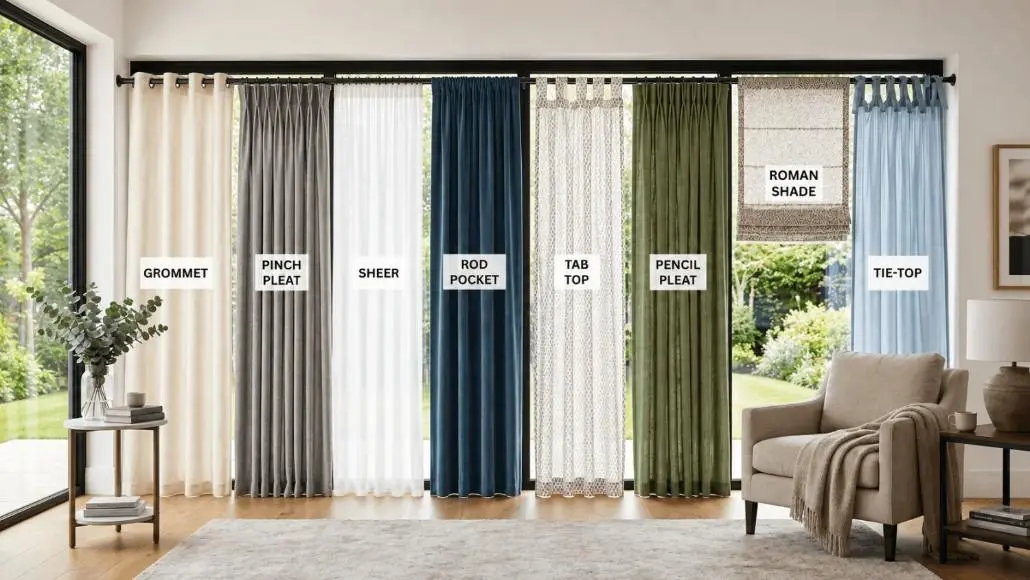



When it comes to Dubai home curtains, it’s not just about selecting a color that matches with your sofa. The right curtains should not only look great but be able to tolerate strong sunlight, offer privacy, and suit the use of each room.
Different curtains are required for a living room with big glass windows compared to a bedroom that gets afternoon sunlight. A bright LED apartment in Dubai Marina might require a higher level of light control, whereas a villa in Jumeirah could be better with full length of curtains as they provide privacy and softness at the same time.
Therefore, before you select a fabric or design, consider what you are seeking from the curtains.
Here’s a practical guide to making the right choice!
1. Start With the Room, Not the Curtain
The easiest mistake is choosing curtains first and trying to make them work with the room later.
Instead, look at the room and ask three simple questions:
- How much sunlight enters the room?
- How much privacy do I need?
- What should the room feel like, bright, cosy, formal or relaxed?
For example, bedrooms usually benefit from better light control and privacy, while living rooms often need a balance between natural light and privacy.
For an open-plan living area, a combination of sheer and heavier curtains can work particularly well. You can keep the sheer layer closed during the day and draw the heavier curtains when you need more privacy or darkness.
The Curtain Shop offers curtains by space, including options for bedrooms, living rooms, offices and kids’ rooms, making it easier to choose according to how the room will actually be used.
2. Think About Dubai’s Sunlight
When it comes to curtains, Dubai’s shining sun is one of the most important factors to take into account.
A window exposed to strong direct sunlight can make a room feel noticeably warmer and brighter, provided that the window gets enough hours of strong direct sunlight. Certain fabrics and colours can also be impacted over time by continued exposure.
This does not imply that all the windows should be fitted with thickest blackout drapes. It’s dependent on the room and the orientation of the window.
For bedrooms
Blackout curtains are usually the practical choice when you want to reduce incoming daylight and create a darker sleeping environment.
You can also layer blackout curtains with a sheer panel. During the day, the sheer fabric allows some natural light into the room while the blackout layer remains open.
For living rooms
If you enjoy natural daylight, sheer or linen curtains may be a better choice. They soften strong sunlight without making the room completely dark.
If the room receives particularly harsh afternoon sun, consider a heavier curtain or a layered setup.
You can explore blackout curtains for better light control if your main concern is sunlight, privacy or creating a darker room.
3. Choose the Right Curtain Fabric
Fabric changes much more than the appearance of a curtain. It affects how the curtain hangs, how much light it filters and how formal or relaxed the room feels.
Here are some common options to consider.
| Curtain Type | Best For | Light Control | Overall Feel |
| Sheer | Living rooms, balconies, bright spaces | Low | Light and airy |
| Linen | Living rooms, bedrooms | Medium | Natural and relaxed |
| Blackout | Bedrooms, media rooms | High | Practical and private |
| Velvet | Formal living rooms, bedrooms | High | Rich and heavy |
| Thermal | Sun-facing rooms | Medium to high | Substantial and functional |
| Eyelet | Modern interiors | Depends on fabric | Clean and contemporary |
Linen curtains

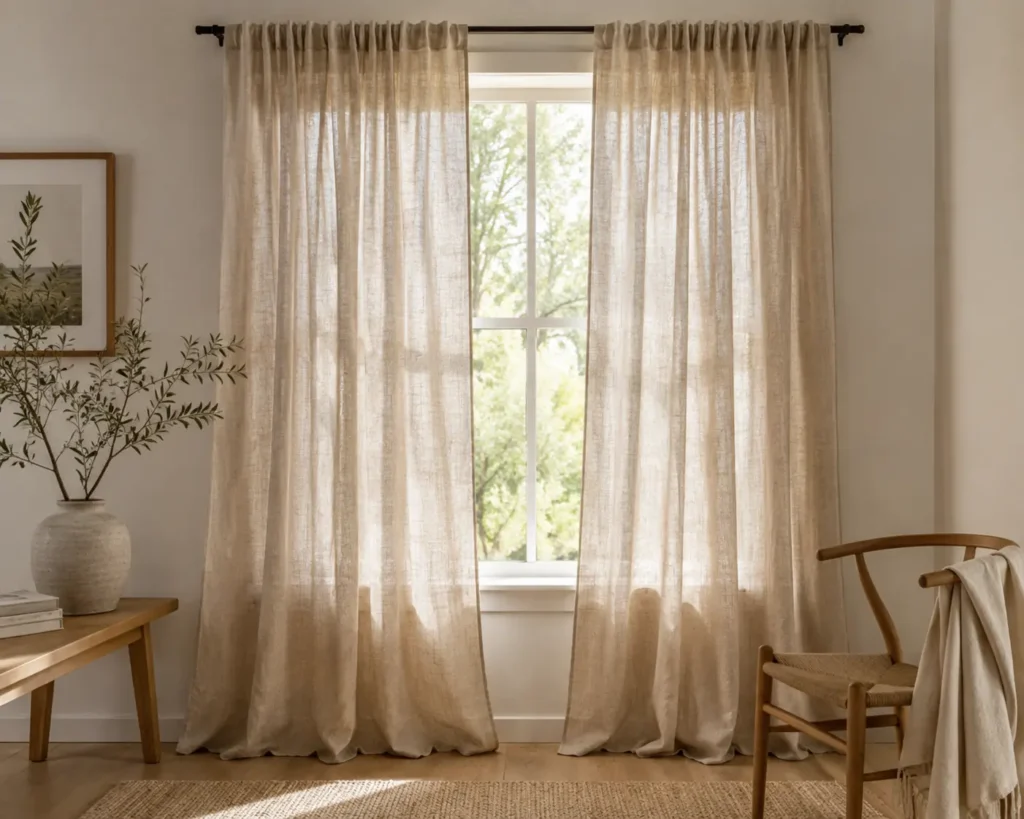
Linen is a good option if you want a natural texture without making the room feel heavy. It filters daylight and gives windows a softer appearance.
The Curtain Shop’s linen collection includes different textures and styles, and linen can also be paired with motorized systems when the fabric and track are selected appropriately.
Velvet curtains
Velvet has a fuller, heavier appearance. It can suit formal living rooms, master bedrooms and interiors where you want the curtains to become a noticeable part of the design.
Blackout curtains
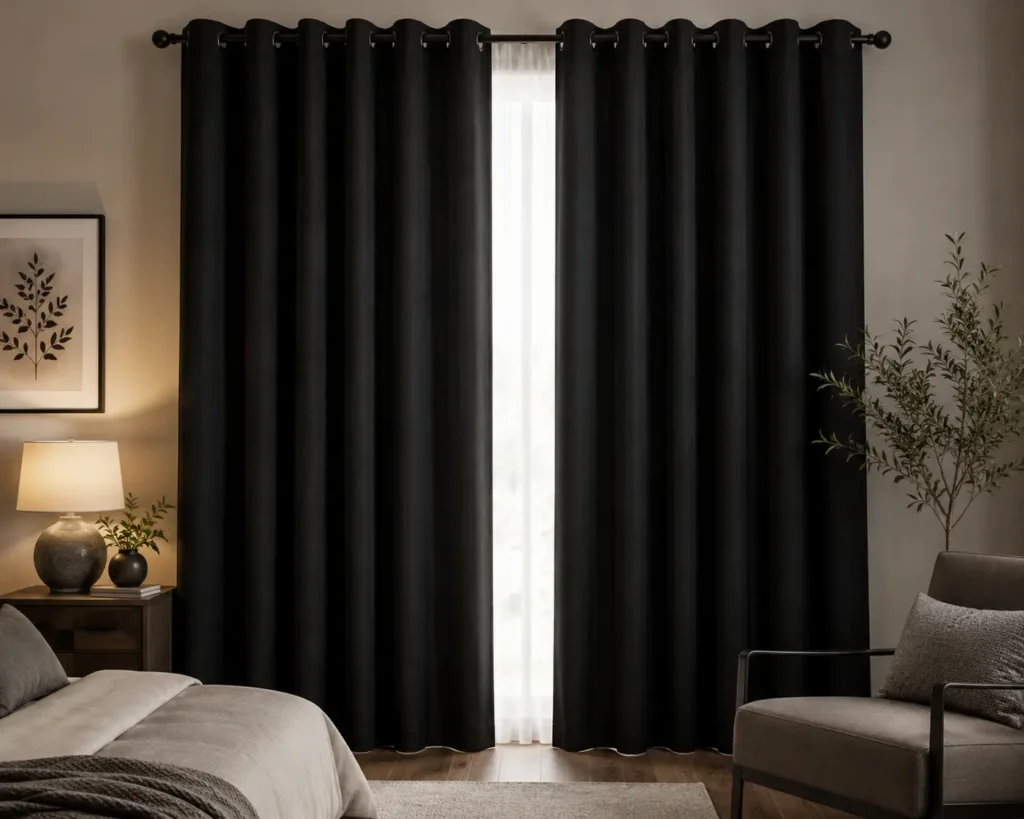
If light control is the priority, blackout curtains are worth considering. They are particularly useful in bedrooms, nurseries and rooms where you watch television.
Keep in mind that the fabric itself is only part of the equation. Curtain width, overlap, track placement and gaps around the sides can all affect how much light enters the room.
4. Decide Between Sheer, Blackout or Layered Curtains
This is one of the most important decisions.
Sheer curtains
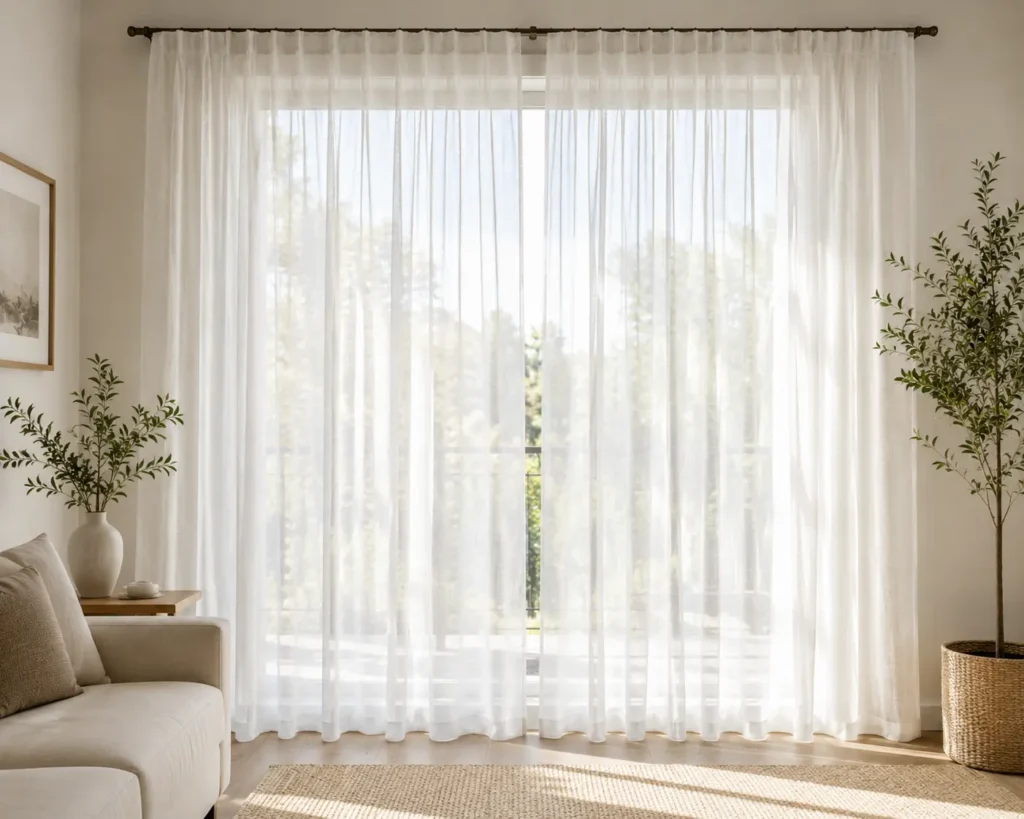
Sheer curtains work well when you want daylight and a softer view of the window. They are particularly useful in living rooms where complete darkness is not necessary during the day.
Blackout curtains
Blackout curtains are better when you want stronger privacy and light control. They are commonly used in bedrooms and rooms exposed to strong sunlight.
Layered curtains
If you cannot decide between the two, use both.
A sheer inner layer and a blackout outer layer give you more control throughout the day.
For example:
Morning: Open both layers for maximum daylight.
Afternoon: Close the sheer layer to soften strong sunlight.
Evening: Close the blackout layer for greater privacy.
This approach is especially useful for Dubai homes with large windows where you want flexibility instead of keeping the room permanently dark.
5. Get the Curtain Measurements Right
Even an expensive curtain can look wrong if the measurements are poor.
Measure the window carefully, but do not assume the curtain should simply be the same width as the window.
The curtain rod or track may extend beyond the window frame so the panels can stack away from the glass when open. This can give the window a wider appearance and allow more daylight into the room.
For height, floor-length curtains generally create a cleaner appearance than curtains that stop several centimetres above the floor.
The final measurement depends on:
- Window width
- Window height
- Ceiling height
- Track or rod position
- Curtain heading style
- Desired fullness
- Whether the curtain should touch, hover above or slightly pool on the floor
For unusual windows, glass partitions or more complicated installations, made-to-measure curtains can be a better option than standard ready-made panels. The Curtain Shop provides custom measurement and fitting for different window structures.
6. Choose a Curtain Colour That Works With the Room
Curtains do not have to exactly match your walls or sofa.
In fact, exact matching can sometimes make the room look flat.
Instead, look at the main colours already present in the space.
If your room has:
- Beige walls and wooden furniture → warm beige, cream, taupe or soft brown can work well.
- White walls and modern furniture → grey, off-white or textured neutrals can add depth.
- Dark furniture → lighter curtains can prevent the room from feeling too heavy.
- Patterned furniture or rugs → plain curtains may create a better balance.
- A simple neutral interior → a stronger curtain colour or subtle pattern can become a feature.
For large windows, remember that curtains cover a significant visual area. A colour that looks subtle on a small fabric sample may feel much stronger when used across an entire wall.
That is why seeing fabric samples beside your actual flooring, walls and furniture is useful before making a final decision.
7. Consider the Curtain Heading and Hanging Style
The top of the curtain affects how it folds and how formal it looks.
Common styles include eyelets, pinch pleats and other track-based heading options.
Eyelet curtains
Eyelet curtains create larger, regular folds and generally suit contemporary interiors. They are particularly suitable when you want a straightforward, modern appearance.
Pleated curtains
Pleats can create a more structured and formal look. They also work well with curtain tracks and layered window treatments.
Tracks vs rods
Curtain tracks are often preferred when you want a clean appearance, especially when the curtain needs to run close to the ceiling or across a wide opening.
Rods can be a better visual choice when the hardware is intended to form part of the room’s design.
The best option depends on your window, curtain weight, ceiling height and overall interior style.
8. Think About Privacy During the Day and Night
Privacy requirements can change throughout the day.
A sheer curtain may look private during bright daylight because it limits the view from outside while allowing you to see out. But once the room becomes brighter inside than outside at night, that privacy can change.
This is why bedrooms and street-facing windows often benefit from a second, more opaque layer.
If your apartment overlooks neighbouring buildings or a busy road, think about privacy before choosing a lightweight single-layer curtain.
9. Choose Curtains Room by Room
There is no rule saying every window in your home needs identical curtains.
In fact, using the same fabric everywhere may not be practical.
Living room
Look for curtains that balance daylight, privacy and appearance.
Sheer, linen or layered curtains can work well depending on the amount of sunlight and the style of the room.
Master bedroom
Prioritise privacy and light control. Blackout curtains or blackout layered with sheer fabric are practical choices.
Children’s room
Choose a fabric that is easy to maintain and a design that will not quickly feel outdated. The Curtain Shop also has curtain options specifically grouped for kids’ rooms.
Home office
Consider how sunlight affects your screen. A curtain that reduces glare without making the room unnecessarily dark can make the space more comfortable.
Dining area
Lightweight curtains can keep the room feeling open. If the dining area has large glass doors, consider how the curtains will move and where they will stack when fully open.
10. Don’t Forget Curtain Hardware
The fabric gets most of the attention, but the hardware matters just as much.
A heavy curtain needs a suitable track or rod. Wide windows may require stronger hardware and proper support points.
You also need to consider whether you want:
- Wall-mounted tracks
- Ceiling-mounted tracks
- Curtain rods
- Motorized tracks
- Single or double tracks for layered curtains
A double track can be particularly useful when combining sheer and blackout curtains.
The Curtain Shop also provides fitting and related curtain services, including curtain hanging, track repair, motor repair and alignment correction.
11. Is Motorized Curtain Control Worth It?
Motorized curtains are not necessary for every room, but they can be genuinely useful in certain homes.
They make sense when:
- Windows are very large or difficult to reach.
- Curtains are heavy.
- There are several windows that need to open together.
- You want scheduled or remote operation.
- The curtains are installed high above the floor.
- You are building a smart-home setup.
For a large villa or apartment with floor-to-ceiling glazing, motorized curtains can also make everyday operation much easier.
For a small bedroom window, however, a conventional track may be perfectly adequate.
The important thing is to choose the system based on how you will use the room rather than choosing motorization simply because it is available.
12. Think About Curtain Maintenance
Before buying a curtain, ask how it needs to be cleaned.
Different fabrics can have different care requirements. Some can be washed more easily, while others may need more careful cleaning.
Dubai homes can also collect dust quickly, particularly around windows and balconies.
A practical curtain should therefore fit your cleaning routine.
When comparing fabrics, ask about:
- Washing instructions
- Dust accumulation
- Colour stability
- Wrinkle behaviour
- Lining requirements
- Professional cleaning requirements
A beautiful fabric that requires more maintenance than you are willing to provide may not be the best choice for your home.
13. Avoid These Common Curtain Buying Mistakes
A few small decisions can make a surprisingly big difference.
Choosing curtains only by colour
Colour matters, but it should not come before function. A beautiful curtain that lets in too much morning light will quickly become frustrating in a bedroom.
Buying the wrong size
Short curtains or insufficient width can make a room look unfinished.
Ignoring the window direction
A north-facing window and a west-facing window may have very different sunlight conditions. Consider when direct sunlight enters the room.
Using heavy curtains everywhere
Heavy fabrics can make small rooms feel visually crowded. They are better used where their weight and light-control properties are actually useful.
Forgetting the hardware
The right fabric will not look right if the rod or track is poorly positioned or unable to support its weight.
Skipping professional measurement
Large windows, floor-to-ceiling glazing, bay windows and unusual openings can be difficult to measure accurately. A small measurement error becomes much more noticeable when the curtain spans an entire wall.
A Simple Way to Choose the Right Curtains
If you are standing in a curtain showroom surrounded by fabrics and still cannot decide, use this order:
- Choose the function.
Do you need privacy, darkness, daylight or decoration? - Consider the sunlight.
Look at when direct sunlight enters the room. - Select the fabric.
Choose between sheer, linen, blackout, velvet, thermal or another suitable material. - Decide on layering.
Ask whether one curtain is enough or whether sheer plus blackout would be more useful. - Choose the colour and texture.
Match the overall room rather than one individual piece of furniture. - Measure the window.
Consider the full track or rod position, not just the glass area. - Select the hardware.
Choose a track, rod or motorized system that suits the curtain weight and window. - Check maintenance.
Make sure you are comfortable with the fabric’s cleaning requirements.
This approach keeps the process practical and prevents you from making the decision based only on what looks good in a showroom.
Final Thoughts
The perfect curtains for your Dubai home are not necessarily the most expensive or the heaviest. They are the ones that suit the room, control light where necessary, provide the privacy you need and complement the rest of your interior.
For one room, that might mean soft linen curtains. For another, it could be blackout panels. In a bright living room, a sheer and blackout combination may make more sense than either option on its own.
Take the time to consider the window, sunlight, room function, fabric, measurements and hardware together. Once those practical decisions are right, choosing the colour and style becomes much easier.
If you need made-to-measure curtains, professional measurement or fitting in Dubai, The Curtain Shop provides custom curtain solutions for different window sizes and structures.