

Walk into any showroom and you’ll see rows of fabric that all look like “curtains.” But the heading style, the fabric weight, and the way a panel hangs can completely change how a room feels and how well it works.
Choose the wrong curtain in Dubai and you’ll end up with a bedroom that’s too bright at 6 a.m., a living room where street noise still gets in or a rod that sags because the fabric was too heavy for it. Choose the right one and the same window can control light and add privacy while helping with insulation, and pull an entire room together visually.
This guide walks through the different types of curtains available in Dubai today. How they’re made, where they work best, and where they don’t. It’s written the way I’d explain it to someone standing in front of a wall of fabric samples, unsure where to start.
What Are Curtains?
Curtains are fabric panels hung above a window (or sometimes a doorway) to control light, provide privacy, and add a decorative finish to a room. They’re one of the simplest ways to change how a space feels without touching the walls or furniture.
Difference Between Curtains and Drapes
People use these words interchangeably, but there’s a technical difference. Curtains are generally lighter, unlined or lightly lined, and sold in standard lengths. Drapes are heavier, fully lined, tailored to the exact window, and pleated for a more structured look. In everyday conversation and in most of this guide “curtains” covers both, since that’s how most homeowners search and shop.
Different Types of Curtains
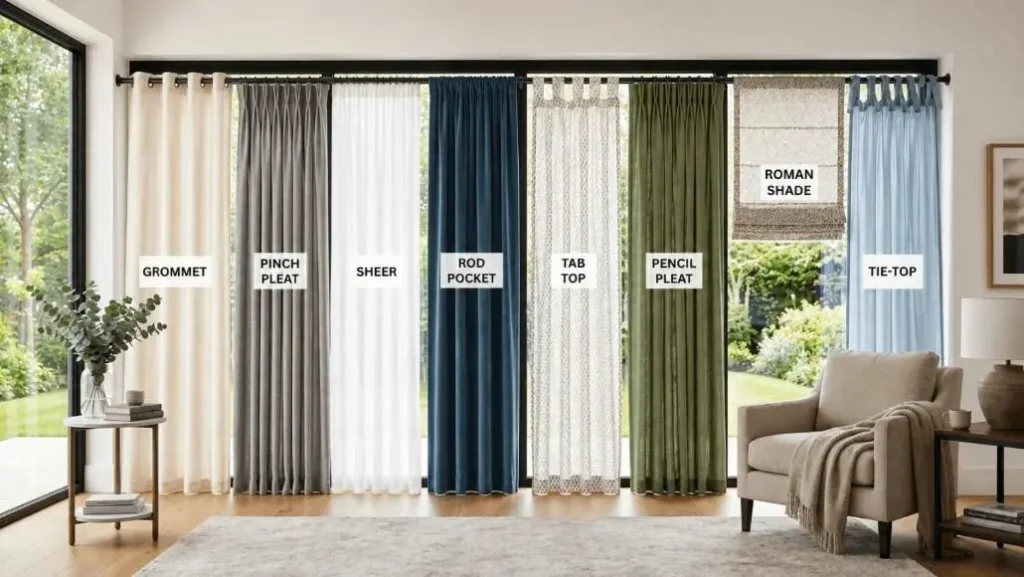
Sheer Curtains
What they are: Sheer curtains are made from lightweight, semi-transparent fabric, usually voile, chiffon, or a light polyester blend. They let daylight filter through softly instead of blocking it.
Best rooms: Living rooms and dining rooms where you want natural light without losing all privacy during the day. Less ideal for bedrooms unless paired with a blackout layer.
Advantages: They soften harsh sunlight, make rooms feel airy, and work well layered behind heavier curtains for a two-tier look.
Disadvantages: Almost no privacy at night when interior lights are on, minimal insulation, and they show dust more easily than opaque fabrics.
Best fabrics: Voile, chiffon, lightweight linen-look polyester.
Maintenance: Machine washable in most cases, but they wrinkle easily and often need light ironing or steaming.
Blackout Curtains
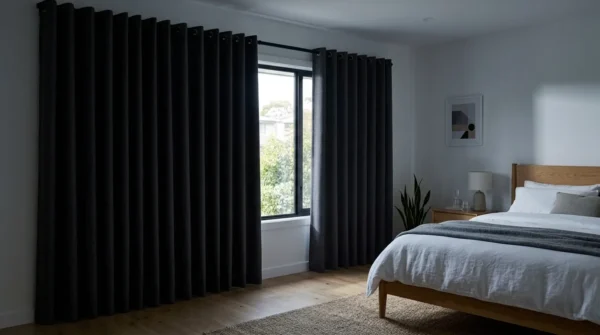
What they are: Curtains made with a tightly woven face fabric plus a special blackout lining (often a foam or acrylic-coated layer) that blocks nearly all external light.
Best rooms: Bedrooms, nurseries, home theaters, and night-shift workers’ rooms.
Advantages: Genuinely useful for sleep quality, they reduce heat gain in summer, and they add a meaningful layer of noise reduction compared to thin fabric.
Disadvantages: They make a room feel darker and heavier during the day if left closed, and cheaper versions can look stiff or plasticky. Effectiveness depends heavily on lining quality, a “blackout” curtain with poor lining won’t fully block light.
Best fabrics: Cotton-polyester blends with triple-weave blackout lining, or velvet with blackout backing.
Maintenance: Usually dry-clean recommended for lined versions, since washing machines can damage the lining bond over time.
Eyelet Curtains
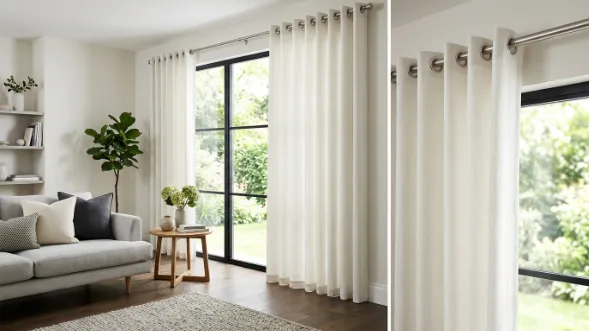
What they are: Curtains with metal rings (grommets) punched directly into the top of the fabric, which slide straight onto a rod without hooks.
Best rooms: Living rooms, bedrooms, and modern apartments, anywhere with a visible decorative rod.
Advantages: Easy to install, glide smoothly, and create clean, uniform folds without extra hardware
Disadvantages: They need a compatible rod (not a track), and the fixed ring spacing means they don’t work well on very narrow or very wide windows without adjusting panel count
Best fabrics: Cotton, polyester blends, linen-look fabrics, mid-to-heavyweight materials that hold the eyelet shape well.
Maintenance: Fairly easy; most eyelet curtains are machine washable, though grommets can occasionally need re-tightening.
Pencil Pleat Curtains
What they are: Curtains gathered at the top into tight, narrow folds that resemble a row of pencils, using a pleating tape sewn into the header.
Best rooms: Traditional living rooms, dining rooms, and bedrooms with a classic decor style.
Advantages: Versatile, they work with curtain rods, tracks, and hooks, and they gather fabric fully for a fuller, traditional look.
Disadvantages: They don’t stack back as neatly as eyelet or wave headings, taking up more space at the sides of the window when open.
Best fabrics: Cotton, linen, and mid-weight polyester blends.
Maintenance: Depends on fabric; cotton and polyester blends are usually machine washable, while lined versions often need dry cleaning.
Pinch Pleat Curtains
What they are: A tailored heading style where fabric is stitched into evenly spaced triple (or single/double) pleats, then hung from hooks on a track or pole.
Best rooms: Formal living rooms, dining rooms, and hotel-style bedrooms.
Advantages: Structured, tailored appearance that holds its shape well, and it drapes elegantly even when the fabric is heavy.
Disadvantages: More expensive due to the tailoring involved, and they generally need professional installation or made-to-measure ordering to get the pleats right.
Best fabrics: Velvet, heavy linen, jacquard, and silk blends.
Maintenance: Usually dry-clean only, especially with structural interlining.
Wave Curtains
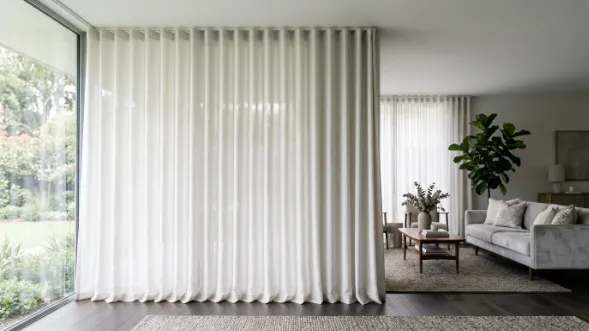
What they are: A modern heading style using a special wave tape and gliders that create smooth, consistent S-shaped folds across the entire width of the curtain.
Best rooms: Living rooms and bedrooms with floor-to-ceiling windows, especially in contemporary homes.
Advantages: Clean, uniform look with no gaps between folds, and they stack back very compactly at the sides, maximizing window view when open.
Disadvantages: They require a specific wave track system, which limits compatibility with existing rods, and installation is less DIY-friendly.
Best fabrics: Medium-to-heavyweight cottons, linens, and blackout-lined fabrics.
Maintenance: Varies by fabric, but the wave tape itself is low-maintenance once installed correctly.
Tab Top Curtains
What they are: Curtains with fabric loops (tabs) sewn along the top edge, through which the rod passes directly.
Best rooms: Casual bedrooms, kids’ rooms, and cottage-style spaces.
Advantages: Simple, relaxed look, and generally the easiest and least expensive heading style to make or buy.
Disadvantages: They don’t glide as smoothly as eyelet or wave curtains, and frequent opening/closing can wear down the tabs over time.
Best fabrics: Lightweight cotton and linen-look blends.
Maintenance: Generally easy-care and machine washable.
Thermal Curtains

What they are: Curtains built with an insulating lining, often a foam-backed or multi-layer fabric designed specifically to reduce heat loss and gain through the window.
Best rooms: Bedrooms and living rooms in climates with hot summers or cold winters, and rooms with older, less efficient windows.
Advantages: Can meaningfully reduce drafts and heat transfer, which may help lower heating and cooling costs, and many also provide some noise reduction.
Disadvantages: Insulation performance depends heavily on how well the curtain covers the window (side leakage reduces the benefit), and they add real weight, requiring a sturdy rod.
Best fabrics: Cotton-polyester blends with a thermal or foam backing, and heavier interlined fabrics.
Maintenance: Typically dry-clean recommended due to the linin
Velvet Curtains
What they are: Curtains made from velvet, a fabric with a dense, soft pile that gives it a signature sheen and heavy drape.
Best rooms: Formal living rooms, media rooms, and bedrooms where a luxury look is the goal.
Advantages: Naturally good at blocking light and reducing noise due to its density, and it has a rich, tactile look that few other fabrics match.
Disadvantages: It needs a strong rod or track and it can trap dust, requiring more frequent vacuuming or professional cleaning.
Best fabrics: Cotton velvet, velvet-polyester blends.
Maintenance: Dry-clean only in most cases; regular light vacuuming with a brush attachment helps between cleans.
Curtain Fabric Types
Cotton: Breathable, easy to wash, and holds dye well. Moderate durability; can fade with prolonged sun exposure unless treated.
Linen: Natural texture, relaxed look, breathable. Wrinkles easily and is more prone to sun damage than cotton over time.
Velvet: Dense pile, excellent light-blocking and noise-dampening qualities, heavy drape. Requires more maintenance and stronger hardware.
Polyester: Durable, affordable, resists wrinkling and fading better than natural fibers. Less breathable and can feel less luxurious.
Silk: Elegant sheen, drapes beautifully. Fragile, prone to sun damage and water spotting, and generally needs professional cleaning and a lining to protect it.
Sheer Voile: Very lightweight and transparent, ideal for filtering light. Offers minimal privacy or insulation on its own.
Chenille: Soft, textured, similar in feel to velvet but usually lighter and less expensive. Good mid-range option for warmth and texture.
Jacquard: Woven with intricate patterns built into the fabric itself rather than printed on top. Durable and decorative, often used for formal pinch pleat curtains.
Conclusion
There’s no single “best” curtain, only the best curtain for your specific window, room, and lifestyle. Sheer and rod pocket curtains suit casual, light-filled spaces. Blackout and thermal curtains earn their keep in bedrooms and energy-conscious homes. Pinch pleat and velvet bring a formal, tailored finish to living and dining rooms, while eyelet and wave headings give modern interiors their clean, minimalist look.
The most important step is choosing based on how the room actually functions, privacy needs, light exposure, climate, and maintenance habits, rather than picking a fabric purely because it looks good in a photo.