


Curtains should usually reach the floor or stop just above it, but they do not have to touch it. For curtains you open each day, a gap of about 1 cm keeps the hem clean and lets the fabric move freely, while a hem that just touches the floor gives a neat, tailored look. Extra fabric pooled on the floor suits decorative panels better than curtains near busy doors or in rooms with pets.
How Far Above the Floor Should Curtains Hang?
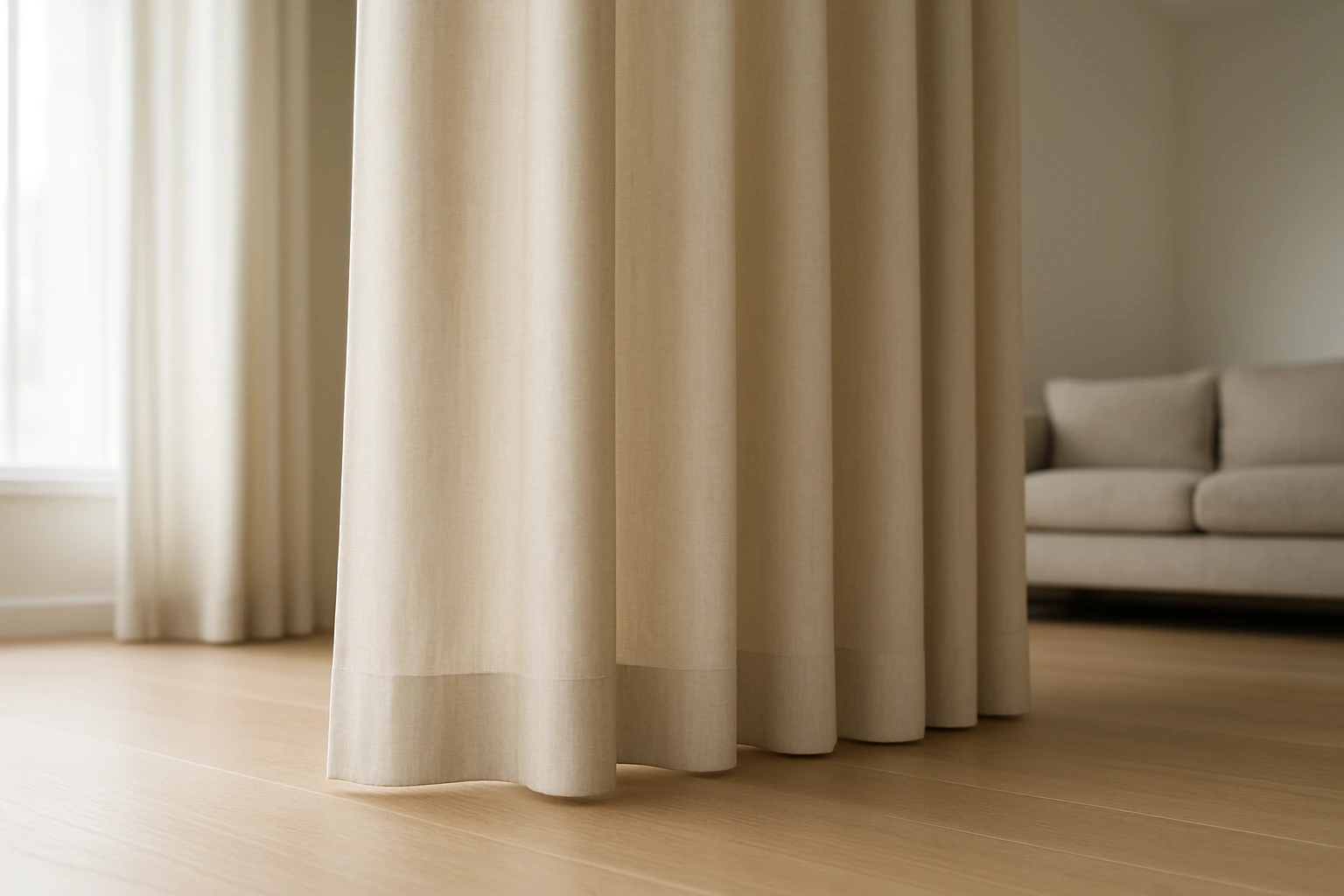
For everyday use, aim for roughly 1 cm between the curtain hem and the floor. This small gap gives a full-length look without making the fabric drag, though the best finish depends on how often you move the curtains and how level the floor is.
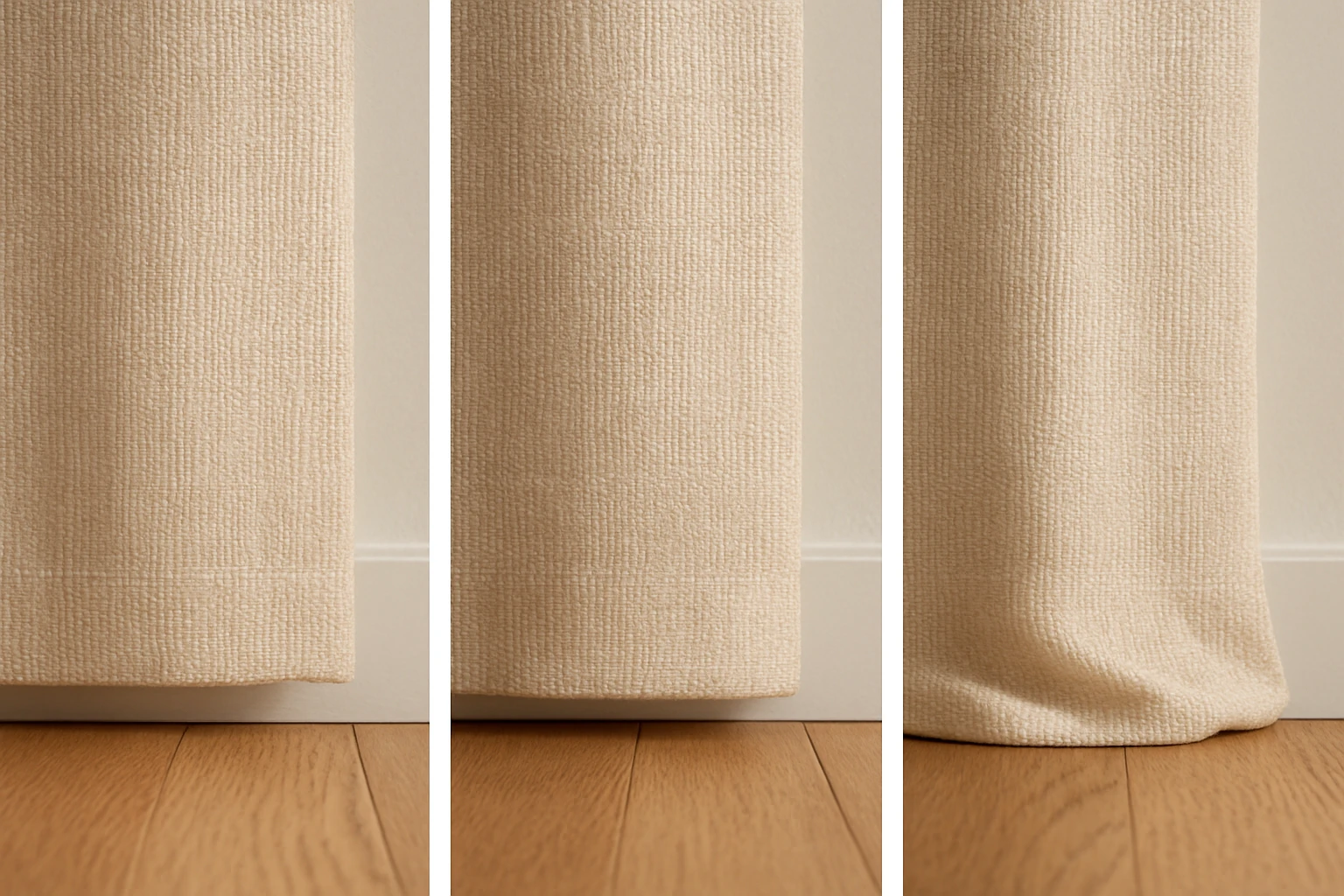
These are useful fitting targets, not fixed rules. The curtain heading, which is the way the fabric is gathered at the top, can affect the final result, as can the fabric’s weight and the floor surface.
| Curtain Finish | Position of the Hem | Best Use | Main Trade-Off |
|---|---|---|---|
| Float | About 1 to 1.5 cm above the floor | Curtains opened daily, busy rooms, and homes with pets | A visible gap may show on an uneven floor |
| Kiss | Barely touches the floor, with no fabric folding over | A neat, tailored finish on a level floor | Small measuring errors can cause dragging |
| Small Puddle | Roughly 2 to 5 cm of extra length rests on the floor | Decorative panels that rarely move | Collects dust and needs arranging |
| Deep Puddle | More than about 5 cm of extra fabric rests on the floor | A deliberately soft, formal look | Makes cleaning and daily opening harder |
A floor-kissing curtain should not bend into a heavy fold at the bottom. If it does, the panel is longer than needed for that finish.
When planning curtains with The Curtain Shop, start with how you use the room rather than a style photo alone. A small gap often gives the same long, finished look as floor contact with less upkeep.
When Should Curtains Stay Clear of the Floor?
Curtains should stay clear of the floor when they cross a busy doorway, need frequent opening, or hang where dust and pet hair collect. A long hem may look attractive while closed but become a nuisance each time the curtain moves.
At a balcony door, the hem should not sweep across the threshold or catch beneath the door. Check the curtain in its open position too, because folds can lean or spread when pushed to one side. In Dubai apartments, dust carried in from a balcony makes a floating hem a practical choice.
For a living room or bedroom, use these guidelines to narrow your choice:
- Choose a floating hem for curtains opened every morning and closed each night.
- Choose a floor-kissing hem when the floor is level and the panels move without catching.
- Keep puddled fabric away from walking routes, children’s play areas, and pet beds.
- Use a shorter curtain or another window covering where a worktop, sink, or fixed fitting blocks a full-length drop.
Curtains do not need to reach the floor in every room. A sill-length curtain can be the right choice for a kitchen window, provided the fabric stays away from water, cooking surfaces, and heat sources. Near any heater, follow the appliance manufacturer’s clearance instructions rather than choosing the length for appearance alone.
For choices beyond the hem, this guide to choosing curtains for your home in Dubai helps you match the curtain style to the room’s needs.
How Do You Measure Curtains for the Right Floor Gap?
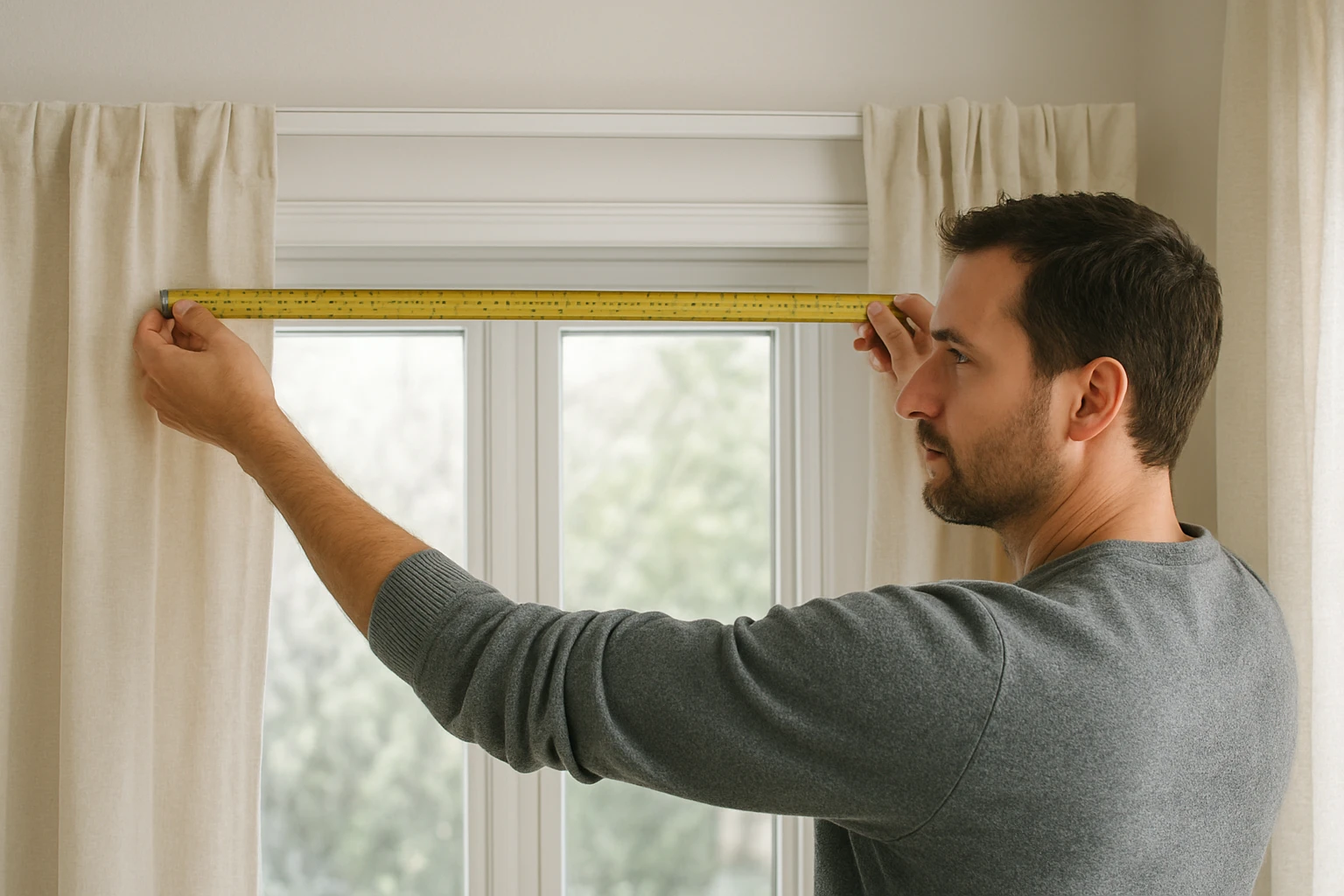
Measure from the curtain’s actual hanging point to the finished floor, then subtract the gap you want. Do not assume the ceiling or the top of the pole is the right starting point. Check the supplier’s instructions for your curtain type.
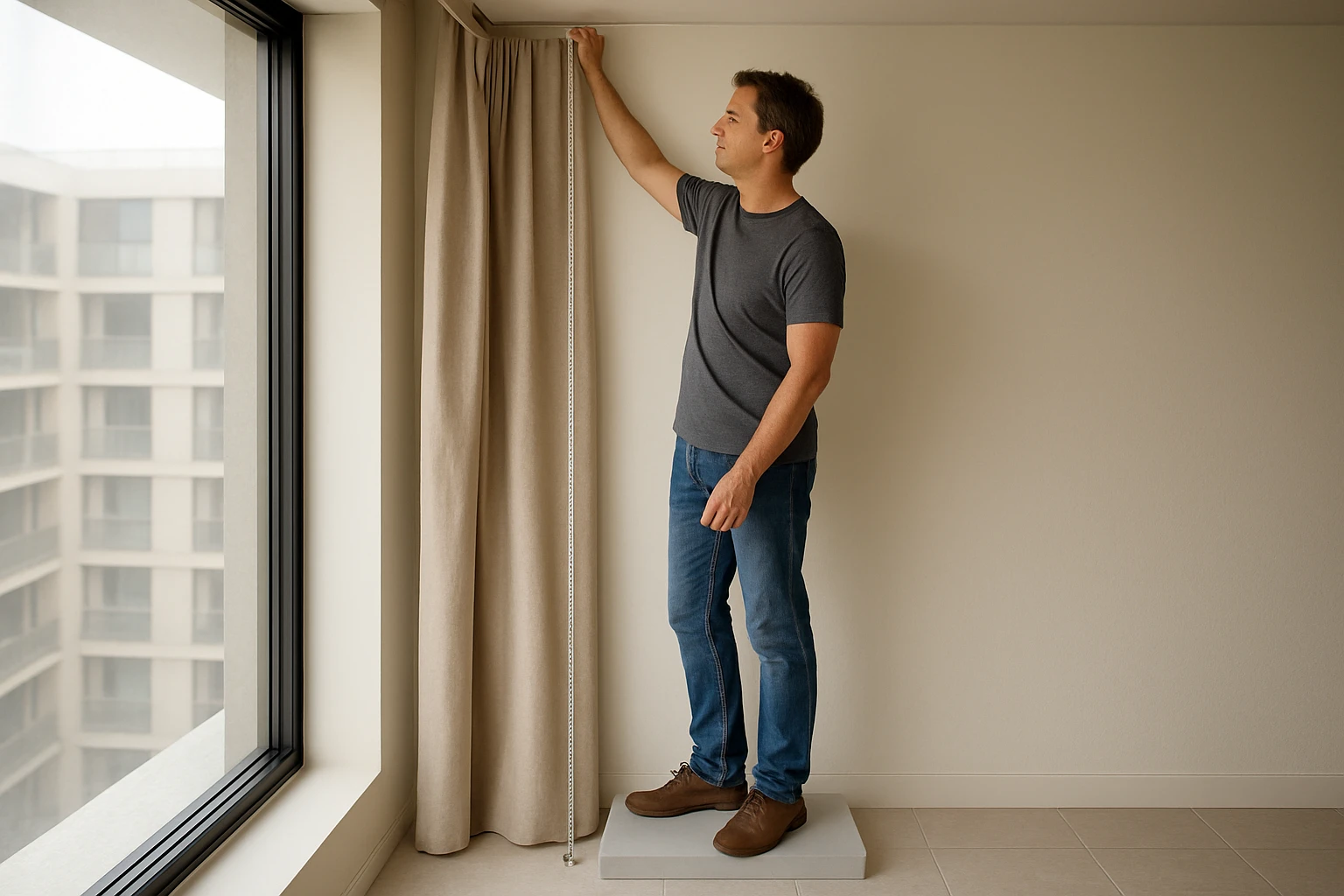
A common mistake is using the same measuring point for every curtain heading. Rings, hooks, and eyelets hold the fabric in different positions, so the panel length you order may not match a simple pole-to-floor measurement.
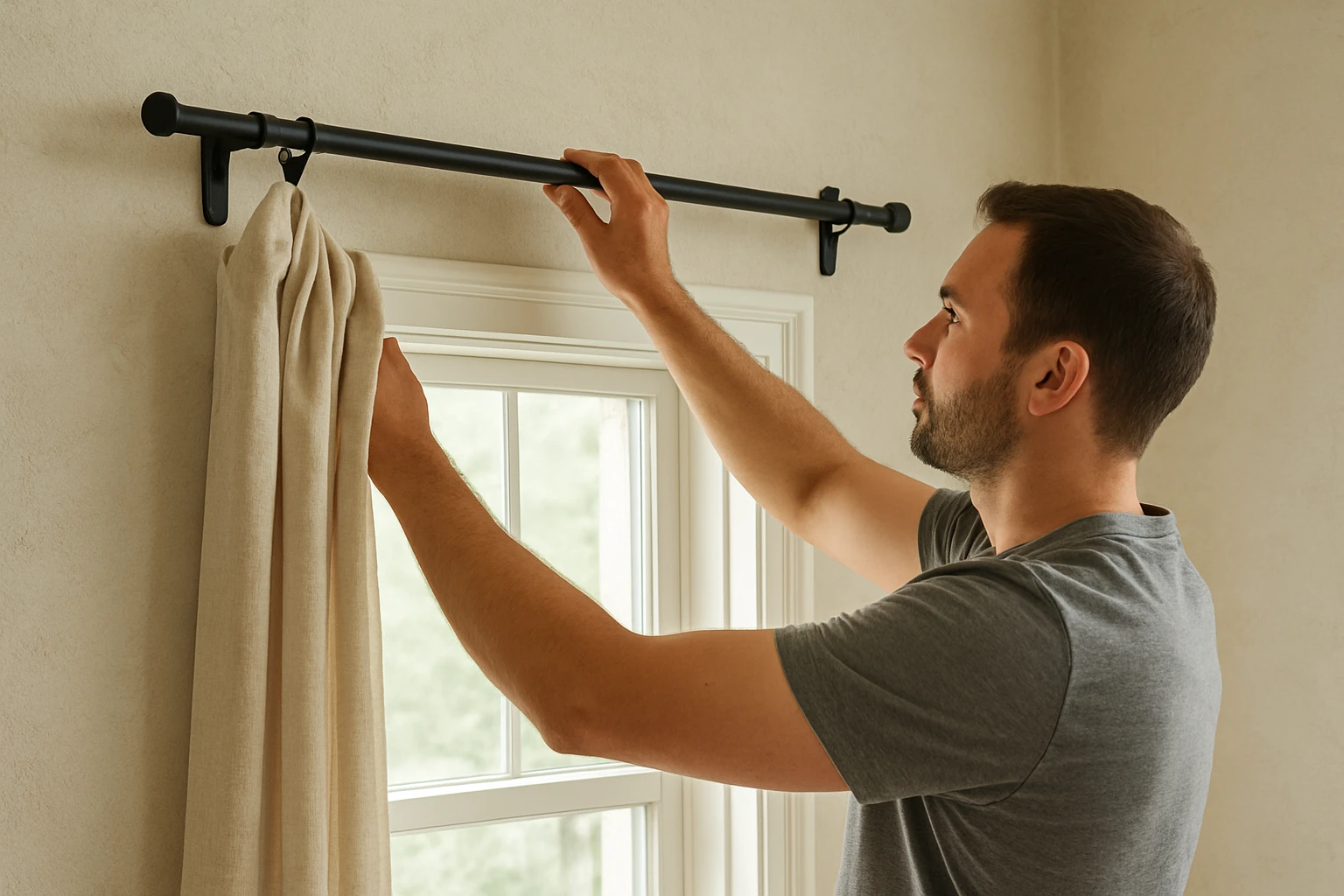
- Confirm the pole or track position first. Raising it after measuring changes the curtain length you need.
- Check the supplier’s measuring method. Hooked curtains may be measured from the hook or track eye, while eyelet curtains include fabric above the pole.
- Measure at the left, middle, and right. Floors and tracks are not always level, even when they look straight.
- Use the shortest drop to avoid dragging. For a floating finish, subtract your chosen gap from that measurement.
- Check the full travel path. Move the curtain across the opening and make sure the hem clears the floor throughout.
For example, if the measured drops are 250, 249.5, and 250.5 cm, the shortest is 249.5 cm. Subtracting a 1 cm gap gives a target drop of 248.5 cm, using the supplier’s stated measuring point. The gap will be slightly wider over the lower parts of the floor.
Measure after the flooring and any rug beneath the curtain are in place. If the track height or fixing position is still uncertain, arrange curtain installation before confirming the final drop.
Should Sheer and Blackout Curtains Be the Same Length?
Sheer and blackout curtains should usually finish at about the same height above the floor, but each layer needs its own measurement. Two tracks can hold the fabrics at different heights, so ordering identical panel lengths does not always produce matching hems.
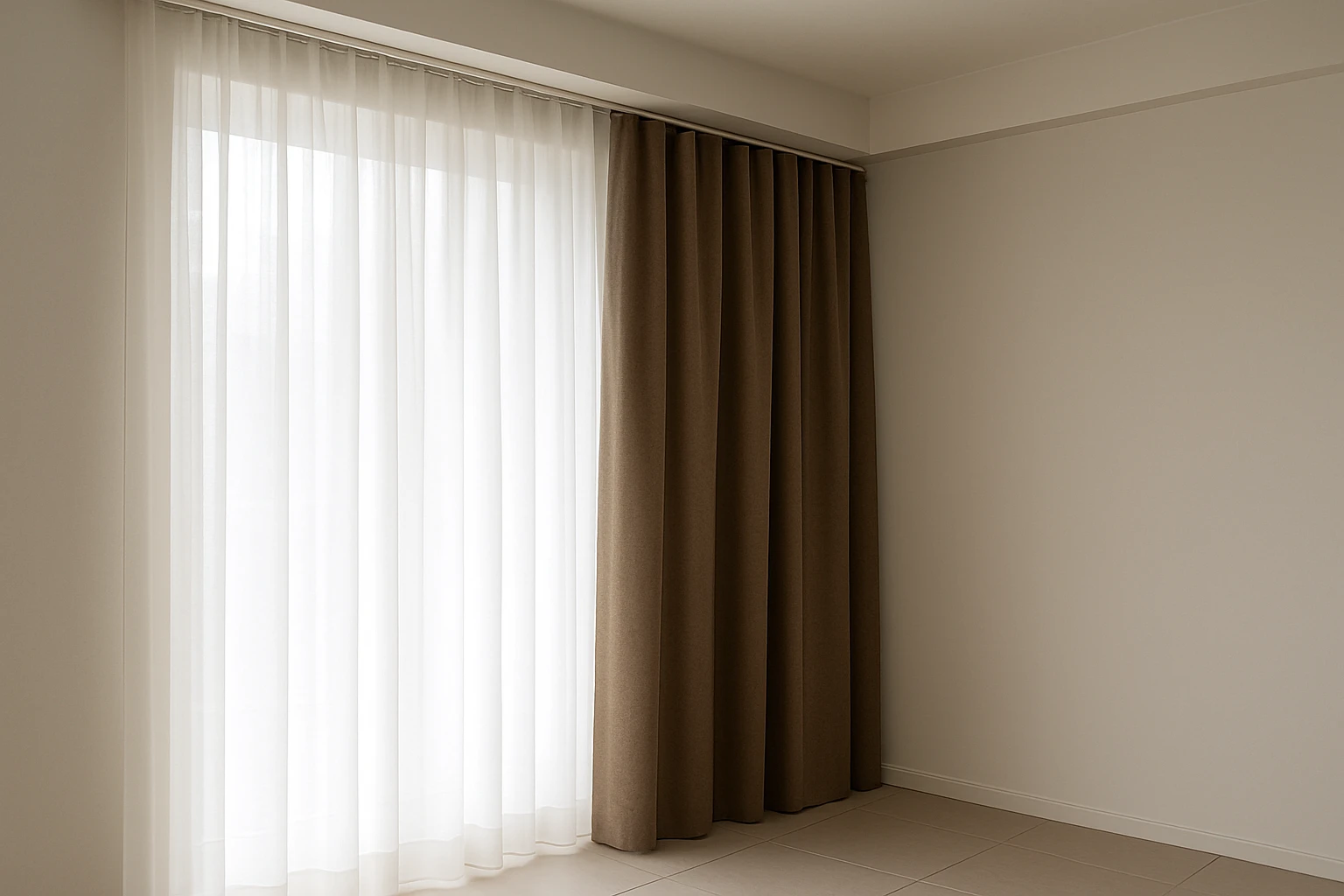
A floating hem often works well for sheers because light fabric picks up dust when it brushes the floor. A heavy outer curtain can kiss the floor, but check that its weight does not make it catch when drawn.
Fabric also affects how well a close fit will last. Linen and some other fabrics can change length with moisture or cleaning, so follow the fabric care instructions and ask how much the length may change before choosing a floor-kissing finish. For washable ready-made panels, follow any prewashing advice before setting a permanent hem.
Floor contact alone does not make a blackout curtain lightproof. Light can still enter above the track, around the sides, and through the centre opening, so address those gaps rather than adding a large puddle at the bottom. The comparison of blackout curtains and sheer curtains explains how the layers serve different purposes.
What Should You Do If Curtains Are Too Long or Too Short?
Curtains that drag usually need their hooks adjusted or their hems shortened, while short curtains may need the hem let down or the hanging position changed. Check the cause before altering the fabric, especially if only one end touches the floor.
If a curtain drags at one side but floats at the other, the floor or track may be uneven. Shortening both panels by the same amount will not necessarily fix that difference, so measure again across the opening.
Some curtain tapes have several hook positions that allow small height changes. Check that moving the hooks will not expose the track or make the top edge rub against it. If adjusting the hooks is not enough, pin the proposed hem and test the curtains open and closed before sewing.
For curtains that are too short, inspect the existing hem for spare fabric. Letting it down may leave an old crease or stitch marks, while lowering the pole can leave visible fixing holes and reduce coverage above the window. A matching fabric border is another option, but it should look like part of the design rather than a narrow repair strip.
Before ordering made-to-measure curtains, read the Custom Order Policy and the Return and Refund Policy so you understand the terms before approving the size or altering a panel.
For most homes, the safest choice is a full-length curtain that stops about 1 cm above the floor. Choose floor contact because you want that precise finish and can keep it looking neat, not because every curtain is supposed to touch.
Frequently Asked Questions
Are Curtains That Stop Several Inches Above the Floor Too Short?
Curtains that stop several inches above the floor often look unintentionally short when they are meant to be full length. A small clearance or a clear sill-length finish usually looks more deliberate. Before replacing them, check whether the hem can be let down or the hanging height can be adjusted without reducing window coverage.
Should Curtains Touch a Rug or the Floor Underneath It?
Measure to the rug’s surface if the curtain hangs or moves over the rug. Measuring only to the hard floor can leave the hem dragging through the pile, which makes opening harder. If only part of the curtain crosses the rug, check the whole travel path and allow clearance above its highest point.
Can a Robot Vacuum Catch Floor-length Curtains?
A robot vacuum can catch loose curtain fabric, especially when the hem rests on the floor. A narrow floating gap helps with cleaning but does not guarantee the vacuum will avoid the fabric. Watch its first run near the curtains, then use the machine’s supported exclusion settings or keep the panels out of its path.
Can I Use Iron-on Hemming Tape to Shorten Curtains?
Iron-on hemming tape can shorten some curtains, but it must suit both the fabric and its care instructions. Heat can damage certain sheer fabrics, linings, and blackout coatings, so test a hidden area only when the care label permits ironing. A sewn hem is often easier to alter later if you need to change the length.